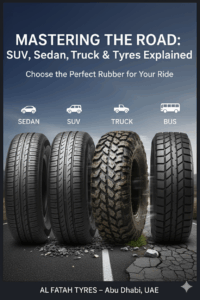
How to Choose the Right Tyres: SUV, Sedan, Truck, Pickup & Bus Tyres Explained
Choosing the right tyre depends on your vehicle type, driving habits, and UAE weather conditions. This guide explains the best tyres for sedans, SUVs, trucks, pickups, and buses, with expert tips from AL FATAH TYRES Abu Dhabi. Q1: How do I choose the right tyres for my vehicle in Abu Dhabi? To choose the right tyres, match your tyre size, load rating, speed rating, and driving conditions. Sedans need comfort and low-noise tyres, SUVs need stronger construction, and heavy vehicles require high load-index tyres. Q2: What tyres are best for sedans? Sedan tyres should offer low noise, strong wet grip, and good fuel efficiency for daily city driving in the UAE. Key Features: Recommended Brands:Michelin, Continental, Bridgestone, Dunlop, Yokohama, Kumho, Nexen. Q3: How do I choose the right tyres for SUVs in Abu Dhabi? SUV tyres must handle more weight, heat, and mixed terrain. Types of SUV Tyres: Popular Brands:BF Goodrich, Michelin, Bridgestone, Goodyear, Pirelli. Q4: What tyres are suitable for trucks in UAE? Truck tyres require high load capacity, steel-belt construction, and heat resistance. Key Features: Types: Steer tyres, Drive tyres, Trailer tyres. Q5: Which tyres are best for pickups? Pickup tyres depend on whether you drive in the city, off-road, construction areas, or tow heavy loads. Best Choices: Recommended: Bridgestone Dueler, BF Goodrich AT, Goodyear Wrangler, Pirelli Scorpion. Q6: What tyres should buses use in the UAE? Bus tyres must handle heavy loads daily with maximum safety. Key Features: Q7: How does UAE heat affect tyres? Tyres in Abu Dhabi face extreme heat, requiring stronger materials and heat-resistant compounds. Look for: Q8: Where to get tyre repair, Road Force balancing & tyre checks? AL FATAH TYRES offers full tyre services including Road Force balancing, inside puncture repair, tyre condition check, runflat repair, and EV tyre solutions. Services: Q9: Is it safe to buy tyres online in Abu Dhabi? Yes — as long as you buy from an authorized shop that provides genuine tyres with warranty and professional installation. Need help choosing tyres? Share your car model + tyre size and AL FATAH TYRES will recommend: